Pages

Friday, October 14, 2011

Doctor's Orders!


Walk Two Trails and Call Me in the Morning!


Rails to Trails simply rocked my socks with their latest newsletter raving about the need for public spaces in areas like New York City. In fact, there have been a few articles from other sources about making of the Highline Park and how beneficial it is to the economy and those who enjoy this park in the sky (stay tuned for a dedicated post on the Guardian write up).


A sad but true statistic of how incredibly sedentary our lives have become: "Almost half of all urban trips in the United States are less than two miles, but almost all of these are taken by car. By choosing to walk rather than drive just a few times a week, we can all make a big difference to our personal health. Many doctors now believe that walking just 150 minutes a week can have marked impact on treating a range of problems, from depression to high blood pressure."


It seems counterproductive to go for a walk when the toxic fumes and noise from buses, trucks and cars overwhelm the streets and make it anything but relaxing. Unless you take the Q41 over to Jamaica Bay Wildlife Refuge or the Q11 to Forest Park, there aren't safe and soothing spaces to walk in South Queens. The tracks in public school yards are closed to the public (yes, I checked). The therapeutic benefits of nature definitely won't kick when you're hitting the pavement around these parts.

"Over the past 50 years we have built landscapes that work for cars but not always for people. In many communities it is inconvenient, or even dangerous, to go for a walk, to try and live an active lifestyle, " stated RTC President Keith Laughlin. I'm not going to call any names ;)

More often than not, parents who live within ten blocks are driving their cars when dropping off and picking up their children from school (which, in my humble opinion, is not a far walk at all and would help to instill healthy habits and bonding time). You cannot tell me you haven't noticed the back-to-back traffic around elementary schools!


I fondly remember my grandpa walking my brothers, cousin and I to P.S. 55 every morning. And sometimes our neighbor's dog Romeo followed us all the way. Grandpa waited until we went inside, walked back home to 125 Street. Then he magically appeared again at 3:00PM to walk us back those 10 blocks. I relished those afternoons, finding treasures of acorns and colorful leaves, which I secretly tucked away into my dad's brown corduroy sport jacket as I skipped along the cracked sidewalks.

Laughlin's words are music to my ears, "At the local level, people are yearning for investments in their cities and towns that make them more livable and walkable." In other words, let's do this!
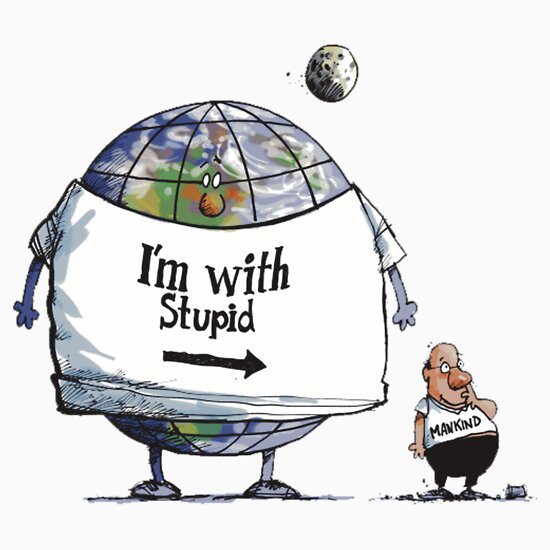


"The testimony of medical professionals is now adding to the growing weight of evidence that investing in biking and walking infrastructure will not only save the nation billions in reduced oil consumption and environmental mitigation, but also slash wasteful health care expenditure." What a fantastic argument to make for the Queens Highline (or any public space for that matter). I'm sure the Department of Transportation is thrilled to hear this!

On this happy and healthy note, I look forward to day when the Rail to Trails crew, our Mayor, Borough President, City Council Members, Community Boards and even the President of the United States come to my neighborhood for a walking tour of the Queens 
Highline.

Thursday, October 6, 2011

Why Now? Why Not?


A Railroad Grows (and Grows!) in Queens


Jacek Yerka
I used to live right across from the end of the abandoned railroad that could be developed (by 99th Street and Rockaway Boulevard) and used to stare out my windows, wondering why nothing has been done to make better use of this currently wasted space. Then I thought how nice it would have been if I could just walk all the way down to Forest Park undisturbed. It was then that my curiosity go the best of me and I really asking questions and finding ways to make it happen.


Of course, the Highline Park becoming a reality in Manhattan gave me hope that this space didn't have to remain an eye sore and I did't have to feel eerie walking by the lonely streets with make-shift garages, sketchy characters and various businesses underneath: from auto-body shops to propane and poultry.


My vision for the Queens Highline more along the gritty and green side. Like Russ Nelson said in a previous post, it would be very community oriented, where we can all literally lend a hand in creating and caring for this park and build an open space for all to enjoy, where we feel safe walking, running, biking, or just relaxing with a cup of coffee or tea.


Perhaps it would motivate more residents will leave their cars home and to come out and explore their new backyard. Wouldn't a bit of solace closer to home be nice?


Here's the dream:
  • Beautiful native gardens designed by Marielle Anzelone of NYC Wildflower Week
  • Edible landscapes thriving with Newtown Pippins and complimentary pollinators, perhaps beach plums and other "wild edibles" designed by Gil Lopez of Nourishing Cities where Wild Man Steve Brill can lead foraging tours
  • With the help of advocates like Geoffrey Croft, Michael Perlman and other community leaders and residents, I truly believe that we will make this happen
  • Learning gardens like those of Rabindranath Tagore where the local artists share their talents
  • Health and fitness programs: yoga, meditation, tai chi, intensati, ayurvedic nutrition
  • Cultural programs reflecting the rich, diverse community of Central and South Queens
  • Initiatives that support sustainable lifestyles and foster community building
  • A compost demonstration site as part of NYC Compost Project in Queens
MTNYC Tree Planting in Far Rockaway
All in all, we're re-creating the community life that has been dwindling over the years with busy households who have hardly any time to enjoy a meal together. This is especially poignant right now where the new graduates, unemployed and underemployed (aka the 99%) are searching for something more substantial in their lives.


I certainly miss the days when children played hopscotch, basketball, hide-and-seek and other games with each other in the streets, when the ice cream truck could be heard blocks away, and we lined up for what seemed like forever with sweaty dollars and hungry bellies awaiting swirly cones with rainbow sprinkles.


Shall we, once again, embrace the beauty of the slow life, where we stop to savor the sweet moments, among the blur of this fast-paced city?

My Vision


Do You See What I See?

Photo by AAPremlall


This is what I see but not what I dream of seeing
Trees sprung from decaying tracks like phantom limbs
Sheltering debris, horizontal trunks and mysterious remains
Rarely do feet run upon the rails where trains did once
Semi-moist leaves and hungry mosquitoes lay waiting
For the curious trespassers who dare to claim
This land is my land
This land is your land
From one end of Forest Park 
All the way to Rockaway Boulevard


Sunday, October 2, 2011

Yay or Nay?

New Rails or New Trails?


Photo by AAPremlall


There has been much debate about what the Queens community wants and the LIRR has in store for this beautiful, crumbling abandoned railroad. 


I cannot say I wasn't delighted to read The Wave's article: MTA Derails Rockaway LIRR Plan


A study revealed that "the replacement of New York City Transit subway service to Far Rockaway with LIRR service and a restored Rockaway Beach Branch to White Pot Junction, while retaining NYC Transit service to Rockaway Park, "would be no net benefit to Rockaway commuters." The report states that 68 percent of Rockaway commuters who have destinations other than midtown Manhattan would not be served and the travel times of Far Rockaway commuters destined for lower Manhattan, Downtown Brooklyn, and other areas of Queens would increase. The study further identified the following as reasons why the proposal was not feasible: LIRR track and terminal capacity constraints would limit or preclude LIRR Rockaway service in critical peak periods; the construction of a required new two-track trestle across Jamaica Bay would impact environmentally sensitive wetland areas; and the cost for construction is high, estimated to be $875 million.


"Face it, easy access to JFK is a smokescreen for what planners really want: increased commuter service for wealthy Long Islanders who work in the Financial District. Since the Rockaway Branch can't provide that, it's best future is as a bicycle path," commented Michael Deitsch succinctly after examining both sides in his blog.


Supportive actions have been made as indicated in Dreams and Schemes for an Abandoned Rail Line: "A bikeway would take this old, abandoned ugly structure and, if you have tree plantings on it and you could beautify it, it would add to the community," said Mary Ann Carey, district manager of Board 9. "It's not something that's going to happen overnight, but we know there is precedent for it." and "That line runs right behind all our homes and properties on 98th Street," Ms. Maria Thomson, Executive Director of the Greater Woodhaven Development Corporation said, "and if it were reactivated, it would be a hazard to the residents and their quality of life."


And some semi-supportive ones as well: "A bike path for the next 20 or 30 years might not be so bad," Assemblywoman Audrey Pheffer, said. "It's a very comfortable use for it in comparison to selling it and putting a building on it. But I'd really like to reactivate it."


What do you think? Would a park in this area be worthwhile? Looking forward to your insights!

Once Upon a Time

Back in the day, the now abandoned LIRR site in South Queens was quite the looker:


In the early days of the IND subway line, there was a plan to attach the LIRR Rockaway Beach Branch line to the IND subway. However, the Depression forced the IND to shelve that plan...but not before installing signage in some of its stations pointing to a Rockaway connection that was never built!


So, the line remained with the LIRR until 1953. Frequent fires on the wooden trestle crossing Jamaica Bay impelled the LIRR to toss in the towel on the old line. It was purchased by New York City, which rebuilt the tracks and began subway service to the Rockaways in 1956.


The northern end of the line above Liberty Avenue remained in service until 1962, when declining patronage convinced the LIRR to close it down.


The right of way of the old line has remained surprisingly intact over the years, and in some places, tracks and overpasses are still in place. This has given some transit visionaries the idea to reactivate it as a one-seat ride to JFK Airport, but since it now runs through a residential neighborhood, it's unlikely that the locals will allow that to happen.


The branch of the LIRR we walked on was constructed in 1908-09 and connected the LIRR with the Rockaway Peninsula. It diverged from the main line at a point just east of the 63rd Drive overpass known as the Whitepot Underjump. The branch point wasn't called a 'junction' because northbound trains passed into a short tunnel under the main line and then merged. All of the Rockaway Branch featured state of the art appointments, which meant no grade crossings, electrification and signals. Most of the branch was on an embankment or elevated over main streets.


The Rockaway Branch featured stations at Grand Street (now Grand Avenue), Rego Park (which were on the Main Line but were stops only for Rockaway Branch trains), Parkside, Brooklyn Manor, Woodhaven [Junction], Ozone Park, Aqueduct, Howard Beach, Hamilton Beach, Goose Creek, The Raunt, Broad Channel, and the myriad stations on the peninsula. Many of the stations were of wooden construction, and no trace of them remains today except a widening of the space between trackways. Two stations made of concrete, Woodhaven and Ozone Park, are still there. In 1956, Aqueduct, Howard Beach, Broad Channel and the peninsula stations were taken over by the TA as subway stations.


Sources: Herbert George, Change At Ozone Park, © 1993 RAE Publishing


http://www.forgotten-ny.net/SUBWAYS/Rockaway%20Line/rockline.html